Crawl Space Encapsulation · Wake County
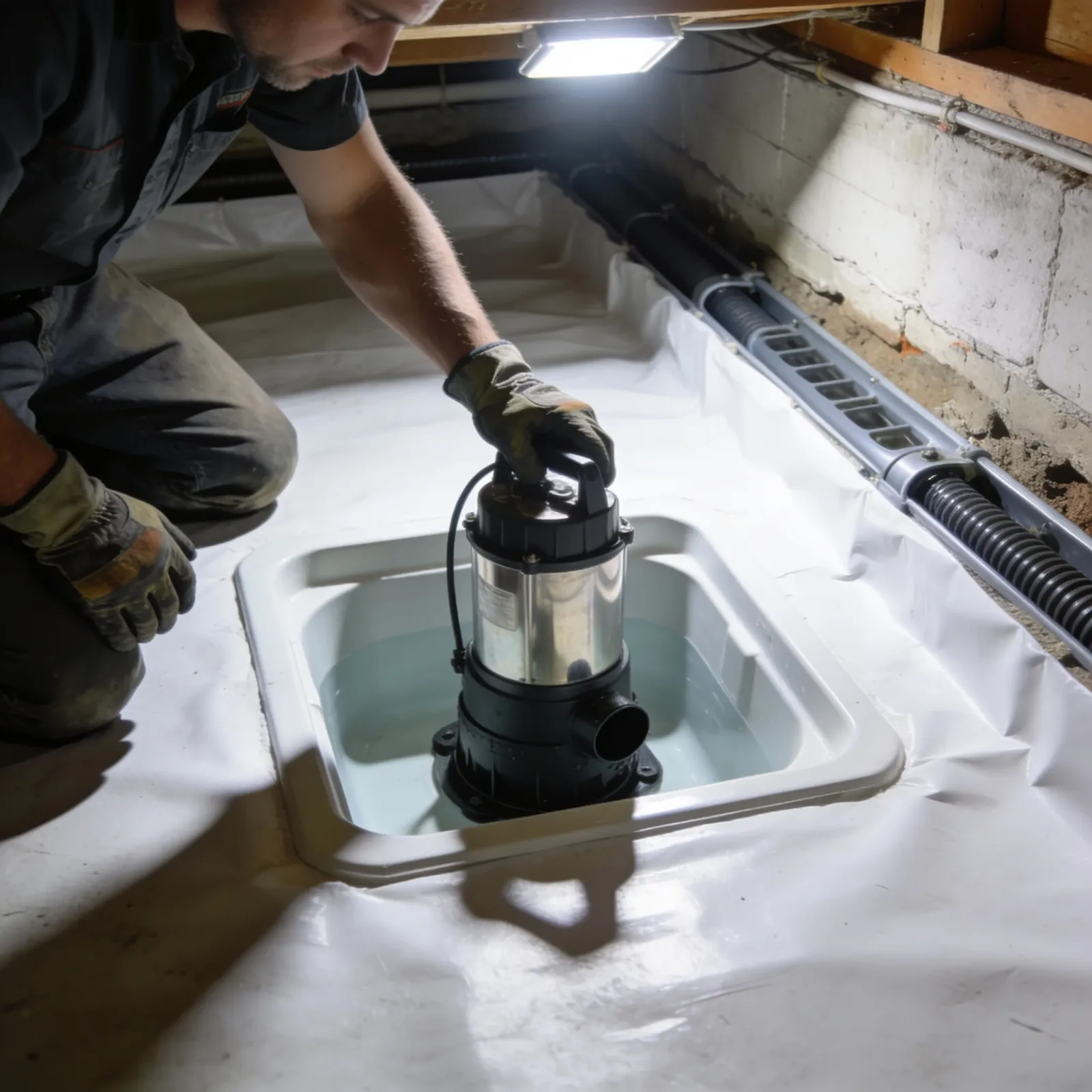
Some crawl spaces take on actual water during heavy rain or when groundwater rises, and a vapor barrier alone won't stop that. An interior drainage system collects water along the foundation and channels it to a sump pump, which moves it safely away from the home. This keeps standing water from sitting under the house and undermining the encapsulation.
If you've seen pooling water, damp low spots, or a high water table after storms, the crawl space likely needs a way to actively remove water rather than just block vapor. We assess where water enters and how it collects, then design a drainage path that routes it to a sump basin and pump rather than letting it spread across the floor.
The heaviest rain in central North Carolina often comes in concentrated downpours, exactly when a sump pump matters most. A properly installed system with a sealed basin and a discharge line carries water away from the foundation, and a battery backup can keep it running if the power goes out during a storm.
Standing water, mud, watermarks on the foundation, or a space that stays wet after rain are all signs. If moisture is coming up through the ground rather than just hanging in the air, drainage and a pump are usually the right fix.
The pump pushes water out through a discharge line that carries it well away from the foundation so it doesn't simply drain back toward the house. The exact route depends on your lot and grading.
Call now or request a callback — same-week appointments across Wake County.
Call (919) 887-1855