Crawl Space Encapsulation · Wake County
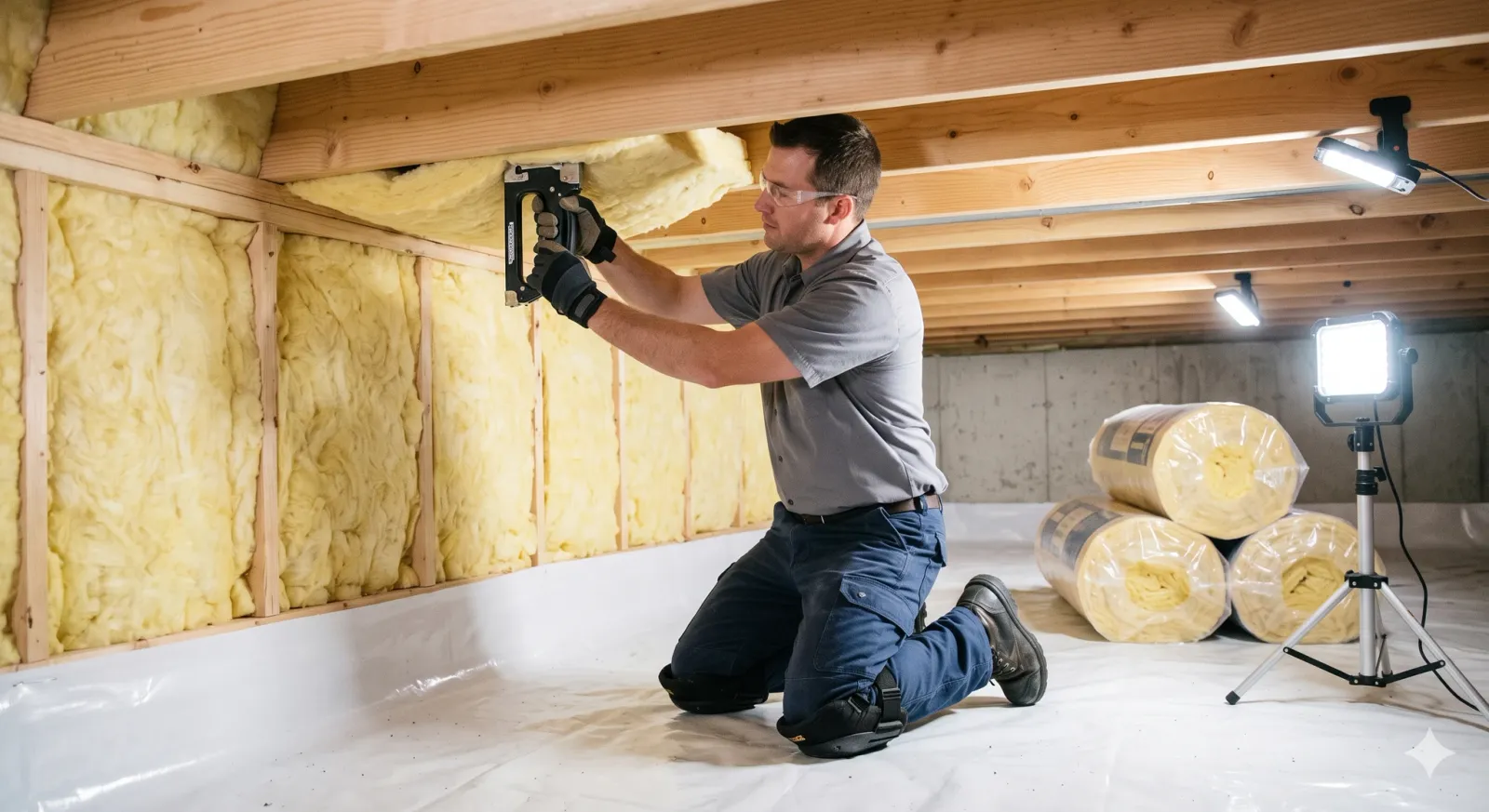
In a damp crawl space, fiberglass insulation stuffed between the floor joists often soaks up moisture, sags, and falls down, doing little good and sometimes harboring mold. As part of encapsulating a space, that old insulation is removed and the area is insulated in a way that actually works with a sealed crawl space. The result is better comfort overhead and a healthier space below.
Insulation hung under the floor in a vented, humid crawl space tends to absorb moisture and lose its effectiveness over time, eventually drooping or dropping onto the ground. Once a space is sealed and conditioned, insulating the foundation walls is often a more durable approach because it keeps the whole crawl space closer to the temperature of the home.
Cold, drafty floors in winter and a damp feel in summer often trace back to what's happening in the crawl space. Removing failed insulation and insulating a sealed space correctly helps steady the temperature of the floors above and can make the whole house more comfortable.
If it's wet, sagging, moldy, or falling down, yes. Leaving damaged insulation in place traps moisture and provides little benefit, so it's typically removed as part of properly insulating the space.
In a sealed, encapsulated crawl space, insulating the foundation walls is often the more effective approach because it keeps the entire space closer to indoor conditions. The right choice depends on your home, which we can assess on site.
Call now or request a callback — same-week appointments across Wake County.
Call (919) 887-1855